• Skip to main content
  • Skip to footer
ELITE ROAD WARRIOR web logo
  • About
  • Speaking
  • Live Workshop
  • On-Site Consulting


SCHEDULE A CALL

PERFORM

Eight Critical Tips for Working From Home Effectively

Some business travelers work in an office building when they’re not on the road. But many, even most business travelers work from home when they’re not on the road. And this can be a challenge.

And right now, many have been forced into a work-from-home situation due to COVID-19. So, no matter what may be causing you to work from home when you’re not used to it or having to learn how to work from home, this is for you.

Now, working from home has its advantages as well as disadvantages.

I’ve had the following experiences:

  • Always in an office environment
  • Business Travel and going into the office on days I’m not traveling which was brutal, especially when I flew in late one night and had to be up early fighting Chicago traffic early the next morning.
  • Business Travel and working from home when I’m not traveling, which is my current reality.

A reminder of my home life: my wife is a school teacher, so during the school year and nonholidays or spring break, I just need to get the Fam out of the house, happy and on time. Then the house is mine.

During the summer or breaks, everyone is home all the time during my workday, which increases my challenges.

All this to say, I have an ever-changing Work-from-Home environment.

Based on years of doing Work-from-Home horribly and learning to make the most of what it hands me, here are my

Eight Critical Tips for Working From Home Effectively:


Tip One – Get Up on Time and Maximize a Strong Early Morning Rhythm

Working from home doesn’t mean it’s time to sleep in.

Be sure to maintain the morning schedule you had when going into the office, and if you now have more time due to not having to commute, use it for exercise or to have breakfast with the family.

Giving in to sleeping longer may reduce your energy level and make it harder to focus.

For example, I have the exact same morning rhythm whether I’m home or on the road with some variation. I do the following:

  • Drink 16 oz of room temperature water with a green mix of veggies/fruit, lemon juice, and sea salt
  • Make my hot green tea
  • Read my Bible for 15 minutes
  • Read a 2nd book that is inspirational or educational
  • Workout
  • Eat Breakfast
  • Connect with the Fam
  • Find your Morning Rhythm no matter at home or on the road.

Tip Two – Create a Designated Work Space

Don’t try to do your job from the sofa, or worse, your bed. If you don’t already have a designated office space in your home, create one.

Set up a table and comfortable chair in a room—or corner of a room—where you’re likely to have the most privacy. Use a decorative screen to help section off your workspace if need be.

Take over a guest room, if you have one, or claim the dining room as your new office, relegating meals to the kitchen instead. The idea is to have a space that’s as private as possible, where you can leave your work materials out at the end of the day.

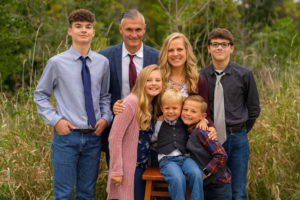
My office was overtaken by those Buckley boys, so I created a workspace in our finished basement area that is a stand-up desk and faces a window. Brilliant!


Tip Three – Develop a Workday Startup Ritual

This is different from your Morning Routine.

You need to have a “Game On” rhythm that puts you in the work zone. It becomes a trigger to you that it’s Time to Work and Getter Dun!

This work startup ritual doesn’t have to be elaborate but simple and consistent. Here’s mine:

  • Fill my Elite Road Warrior water bottle
  • Turn on instrumental music
  • Light a candle
  • Open up my planner to review my schedule for the day

That’s it. Nothing magical or life-changing, but I do it every day to start up my workday.

Wash – Rinse – Repeat.


Tip Four – Create a Key3

These are three key action items that will determine if your day ahead is a success or not.

I’m not talking about your overwhelming task list.

These are the Key3 that will make or break your day.

How do you know what to choose?

Well, if you don’t get them done, you won’t feel like you made the most of your day, something was incomplete or missing, or you “didn’t leave it all on the field” to use a sports analogy.

Those are the days when I feel I was busy the entire day, but don’t feel like I really got anything done. I look back and think, “I was always doing something, but what did I actually accomplish?”

For the record, I hate those days and avoid them whenever possible.

And it starts with creating my Key3 for the day ahead.

Here is my process:

  • Brainstorm what I want to accomplish for the day (and this is always a long list)
  • I look for themes
  • I narrow them down to the most crucial 3
  • I list them in order of most important, 2nd most, then 3rd.
  • Then I start with my 1st of the Key3.

I want to feel at the end of the day that I made the absolute most of the day and did what was key to me and that comes from creating your Key3.

Tip Five – Hide the Distractions

I’m not sure if you’re an easily distracted person or not, but being distracted on the road is completely different than being distracted in the comforts of your own home.

I’ve found three areas where I can become easily distracted:

  • What You See – I cannot have the TV on because I will glance up and see the movement and that’s all it takes / my phone is another visual that can hijack me.
  • What You Hear – I can’t have the TV on or even music with lyrics especially ones that I know. If I’m going to do anything that requires thinking or developing, I find that hearing dings, alerts, notifications from my computer or phone is another distraction hijack.
  • What Enables Procrastination – There are tasks in work that I simply don’t want to do – return that call, write that proposal, start the presentation. And if I notice the dishes are not done or the laundry needs to be folded. All of a sudden, they become incredibly important and MUST BE DONE NOW!

Know thyself and what will hijack your focus and productivity especially for your Key3. Avoid distractions with what you see, what you hear, and what enables procrastination.

Tip Six – Establish a Communication System

Working from home can often leave you feeling cut-off from your coworkers and managers, which can quickly stymie productivity.

Make sure you have a system for effectively connecting, using both chat programs and video conferencing to stay in regular contact. Don’t just rely on email, which can lack details and intent.

The idea is to avoid isolating yourself, even though you’re not physically present at the office.

Know how others like to be communicated with, but make sure it doesn’t become a distraction (like Tip Four) with all the dings and notifications.


Tip Seven – Work in Time Blocks

It’s easy to just open up the computer and dive right into email or CRM. So, Tip Seven is the Money of all Eight tips, so if you get anything from the eight, pay specific attention to this one tip.

In the book, Start Finishing – How to Go From Idea to Done by Charlie Gilkey, he lays out four specific time blocks:

  • Focus Time Blocks – 90-120 minute blocks of time when we’re especially creative, inspired, and able to do high-level work that requires your focus (this would be your key3). Focus blocks fuel your best work.
    Critical – NO distractions. Turn off all alerts. Close email. Turn off your phone.


  • Social Time Blocks – 90-120 minute blocks of time when we’re primed and energetically in the right space to meet other people. This is interacting with people in real-time. This is your video and audio time when you’re home and have meetings, set calls, etc.
    Critical – Spread these out throughout the day otherwise it will drain you. Also, take your calls on a walk. Productivity expert, Marcey Rader, calls them Walkie Talkies. Get some movement in, get outside, and double dip with the call and exercise.


  • Administrative Time Blocks – 30-60 minute low-energy blocks of time when we’re not in the zone to do the work that requires “heavy lifting,” but there are still types of work we can do effectively. Think: email, phone calls, CRM work, digital, paper filing, low-level filing, organizing, etc.
    Critical – Batch admin tasks together which means lumping the same kind of work together (30 minutes of e-mailing, 30 minutes of calls, 30 minutes of CRM updates).


  • Recovery Time Blocks – variable-length blocks of time that we use for activities that recharge us such as a lunch break without a screen, going for a 15-minute mid-morning or mid-afternoon walk to “move the body and rest the mind.”
    Remember, the other three-time blocks of focus, social and admin are energy output blocks, and just like a battery that outputs energy, they need to be charged and this is done with the Recovery Time Block.

Critical – Do NOT underestimate or devalue the importance of the recovery time block, especially when working from home. You need to recharge and stop thinking you’re superhuman and the quality of your work won’t suffer. Lies nothing but lies.

I live my days working from home leveraging these four-time blocks. Each day the amount and length will look different, but that can be planned ahead of time.

In the Elite Road Warrior book, it’s a concept called Block and Tackle. The concept uses these four-time blocks then focuses on tackling only the task in that block of time.

One last word on Time Blocks. Know your energy levels throughout the day.

I use the term energy pacing and learning to become an Energyologist which means becoming an expert of your own energy levels.

It’s key you match your time block with your energy level. Don’t try to do Focus Work if you’re tired or hungry – your results will suffer.


Tip Eight – Develop a Workday Shutdown Ritual

Just as you had created a Workday Startup Ritual, you need to do the same to “shutter down” for the workday.

Work during work hours. When working from home, it can be tempting to try and sneak in some domestic tasks or social engagements. Try to avoid this during designated work hours, as the distraction factor will quickly mount, and you’ll find it hard to keep switching between work and home life. Take a lunch hour and a couple of breaks for your personal tasks, then focus on work during the times you would while at the office.

Honor quitting time. One of the dangers of working from home is that your work is always right there with you. Be as productive as possible during work hours, then end your day as you normally would when at the office. Shut your computer down, organize your papers, turn off the light in your home office space and call it a day. Taking the necessary time to detach from work every day will ultimately make you more productive.

Here is my specific workday shutdown ritual:

  • One last check of email
  • One last check of work platforms like WeChat, Slack, etc.
  • Check my calendar for tomorrow’s appointments
  • Begin to create my Key3 or at least the list of tasks for tomorrow to create my Key3 based on how today went
  • Physically shut my laptop down and audibly say “Case Closed” – why? Sounds silly but it’s a trigger that lets me know I’m officially off the work clock and I’m now on HST – home standard time.

You don’t have to choose all the tips but at least try and implement one tip and see what happens. The goal is daily trying to improve your Work-From-Home environment.

Written by Bryan Buckley · Categorized: DEVELOP, Embrace Better, PERFORM

The Biggest Misconception to Master the Business Travel Life

When I first started as a business traveler a long, long time ago, I took my Type A, driven personality to a whole new level.

It was unleashed on the “open road” if you know what I mean.

I dove into this new opportunity that now included traveling the country and eventually certain parts of the world.

And I loved it.

I already went 100 miles an hour at home and now I was given the freedom to do the very same things on my own on the road.

Brilliant!

And I met hundreds and hundreds of business travelers who validated my theory.

Drive.

Drive..

Drive…

Personal Drive which was inner.

Road Drive which was outer.

And I poured myself into my work.

Nobody could and would outwork yours truly on the road.

And if I found out you did, I would sleep less and try to wear you down.

I even coined a phrase I use often called the Travel Triangle:

  • Airport
  • Board Room
  • Hotel Room

Wash – Rinse – Repeat.

And between us girls, I got good and I mean really good at the Travel Triangle.

I prided myself on not being outworked and killing it on the road.

But here is the biggest misconception I thought to master the business travel life.

Are you ready for it?

It’s all about WORK.

Um, excuse me. Aren’t you there to work?

After all, it is called BUSINESS Travel.

Touche.

But not ONLY work.

Now, don’t get me wrong. This is not a free pass to slack off.

But let me repeat, the biggest misconception to master the business travel life is it’s not only about work.

I believed this lie for far too long.

I went from a not so suite job to c-suite.

I had the cheap rental cars and lousy hotel rooms and fast food meals to living large and driving cool cars right up to my plush hotel, eating the best of the king’s food and drinking the best of the king’s wine.

But in the end, believing this misconception, business travel is only about work, almost took two very important parts of my life.

Let me tell you how I found out first of all.

As I mentioned earlier, I’ve always gone 100 miles an hour in my life and it manifested itself with business travel.

I could get more done in a day than the average guy.

More trips.

More presentations.

More meetings.

More emails.

More calls.

I was up late and up early.

This high-performance car showed no signs of any deterioration.

At least on the outside.

Nothing but praises and raises were given to this high performer.

But then when I turned 40, things internally were going wrong.

I was getting very strange symptoms:

  • Heart racing
  • Flush face
  • Eyes glazed over
  • Migraines
  • Diaherria
  • Inability to absorb content
  • Sleeping and never feeling any effects of the rest
  • I went to the doctor and they told me the good news: we can’t find anything wrong.

Then they told me the bad news: we can’t find anything wrong.

And you know what I did after that?

Absolutely nothing.

I went harder.

And harder.

For years.

Until age 45, my body shut down and shut down hard. A complete and utter engine blowout.

It was like I turn a turn marked 30 and I slowed down from 100 to 70, hit the wall and the race was over.

But wait, there’s more.

During the same time, I was always busy on the road so therefore had little to no time to check-in when friends and family back home.

My friends understood or simply moved on.

The family?

They were feeling Dad’s distance both physically and emotionally.

To be blunt…

It was not good.

My wife and I were fighting over stupid things when I left, stress while I was gone.

It was brutal and hard enough leaving then to end with a massive fight just sucked.

Then the kiddos tension…

Kids cried when I left and upset about what I missed while I was gone.

I checked in at all the wrong times and was always distracted.

I was killing it on the road and getting killed at home.

I was important on the road but invisible at home.

To be honest, I was a hot mess when I got home due to the exhaustion than just so disconnected with home trying to make up for lost time but feeling paralyzed on how to make this mess I created any better.

How’s that for a vulnerability bomb?

What resulted was the foundation of the Three Focus Areas of Elite Road Warrior:


Remember, the biggest misconception to master the business travel life was in the 1st focus area: WORK.

Is it important? Absolutely. In fact, it’s Energy Habit #4: PERFORM. It’s why we’re ON the road.

But it’s not everything.

If you lose your health, how much harder is work or how much does work matter?

If you struggle or lose your family, how much is work affected?

When I lost my health, everything in my life was on hold. I couldn’t work.

My life revolved around my next medical test. Forced rest. Supplements.

When I had stress back at the Buckley ranch, my mind was elsewhere on the road. I felt the tension and handled it in unhealthy ways.

Not good, road warriors.

The stark reality is the three focus areas are all inter-related.

Eventually, I learned that when I had my health in an optimal place and my relationships back home with those I loved were strong, my work on the road actually improved.

This is key.

I had more energy.

I had less stress.

I had more clarity.

I felt more supported and connected.

Let’s be brutally honest…

The inbox will always receive emails.

There will always be calls to return.

There will always be another proposal to write, presentation to give, deal to close.

But nobody can take care of your health except you.

Will the business world end if you took 20-30 minutes to go for a walk or run or workout in the hotel fitness center or hotel room?

Nope.

Hence energy habit one: MOVE.

I chose to challenge every single morning on the road.

Prioritize the 2nd Focus Area of HEALTH.

And those you love back home.

What if you took just a couple of minutes to stop being the check-in guy or girl and became a connect-in guy or girl who learned to leverage the road to grow that relationship in ways you wouldn’t at home through energy habit six: CONNECT – connect intentionally, thoughtfully, and creatively.

It’s how I created the Not Forgotten Journal you’re now hearing about.

It why I created the Flat Kiddos.

It’s why I send postcards to my older sons.

It’s why I pre-write and pre-record intentional, thoughtful words to those I love back home so they know they’re still a priority to me while I’m not physically there with them.

Here’s the point:

Your business world will change entirely if you stopped believing the biggest misconception to master the business travel life that it only has one focus area: WORK.

Take care of your health because only you can.

Take care of your family intentionally, thoughtfully, and creatively to invest into their lives.

Here’s a hard reality: 

Remember, your family has a choice of whether to connect or reconnect with you if you’ve been physically and emotionally distant.

They don’t have to come back to you so don’t put yourself in that position. Two are involved in this decision.

I’ve had too many conversations that break my heart with especially men of power after a couple of double vodka tonics who admit they’re on their 2nd or 3rd marriage and/or their kids could care less if they’re in their lives or not.

My heart breaks hearing this out of shape, lonely, broken but seemingly highly successful business traveler killing it on the road.

It doesn’t have to be this way, road warriors.

There are three focus areas to becoming and remaining an elite road warrior for a reason:


Let’s Land This Plane

The premise of Elite Road Warrior is energy habits. All six of the energy habits are encompassed within the three focus areas:

  1. Work – Energy habit 4: Perform / Energy Habit 5: Develop
  2. Health – Physical Energy Habits – Energy Habit 1: Move / Energy Habit 2: Fuel / Energy Habit 3: Rest
  3. HomeLife – Energy Habit 6: Connect

My hope is this is a challenge, a wake-up call to see how you’re personally doing in the three focus areas.

You may be doing great in one, but what about the other two?

Or maybe good on two but what about the other one?

Remember, you can always find another job but you can’t always get your health back or it’s a long long journey or get your family back.

My hope and prayer are you do whatever it takes to become and remain an elite road warrior and it starts by no longer believing the biggest misconception in business travel and excelling in all three focus areas of Work / Health / Home Life.

You Got This!

Written by Bryan Buckley · Categorized: CONNECT, DEVELOP, Energy, FUEL, MOVE, PERFORM, REST

Six Habits to Leverage the New Year as a Road Warrior

I love fresh starts and I cannot lie.

Paul has been on the road awhile and he has the weight to prove it.

He’s not big on New Years Resolutions with his only New Years Resolution this year is to not have any resolutions!

But he would like to make some changes as a business traveler and leverage the new year as a catalyst.

Things aren’t bad per se, but they definitely could use a lot of improvement.


Paul is typically ahead of the pack in many ways and when he feels bad about himself, he sadly resorts to comparing himself to others which allows him to feel better about himself.

But that’s not who he is most of the time.

Paul wants to get better not just get by and make the necessary changes leveraging the road to do it this upcoming year.

He has what it takes but needs to get momentum and focus on his side.

Paul’s story is like many that come to me asking for a better way.

And it all comes down to two primary words: ROAD HABITS.


These road habits encompass Three Focus Areas:


Too often, we struggle or even lose our health and our home life for the sake of work. You know, that job that never turns off and always demands more and more of you especially on the road?

Paul knows he can improve his work life but also knows if he improved his health and home life, his work would immediately improve as well.

As Paul and I unpacked this conversation, we found his biggest struggle was his mindset of his road life. He viewed the road for all that he couldn’t do:

  • It’s a challenge to eat healthy on the road
  • It’s hard to sleep in a hotel
  • I don’t have time to get in a good workout or a workout at all for that matter when I travel
  • I check in with the fam back home when I can but things get busy

… and on and on and on.

If you were to join my conversation with Paul, this is what you would hear…


Six Habits to Leverage a New Year as a Road Warrior

The first thing I told Paul was to view the road differently. Instead of what he can’t do, look for what the road will enable you to do then leverage it.

In other words, change his mindset of the road.

For example, his family doesn’t travel with him so he has his early mornings all to himself.

Paul creates his own travel schedule and does have some flexibility in when and how he travels, when and how he works.

Then we turned the corner to how to view certain habits, energy habits, through the lenses of not only work but also health and home life, the three focus areas of Elite Road Warrior.

The first three are physical energy habits:

Habit One – MOVE


Most of the time, the road does the moving for us. We’re just always sitting: to the airport, at the gate, on a plane, in a car, in a meeting, at a restaurant, then laying on a bed after a long day mindlessly surfing the tv or a device.

Most road warriors could make one simple change this new year and it would be to move more on the road.

But how?


Move leverages the Increase M4X Formula:

  • Stand More – think up on my feet not down on my butt
  • Walk More – think forward not still
  • Run More – think cardio and getting your heart rate up
  • Lift More – think strength training by using bodyweight, dumbbells, and resistance bands

Stand More – at the gate, on the plane, in a meeting, create a stand-up desk in the lobby, etc.

Walk More – take the stairs not the elevator, walk up the escalator, choose a higher floor at your hotel and take the stairs, park further in the parking lot, take a phone call on a walk.

Run More – actually use the treadmill or elliptical in the fitness center, try burpees in your hotel room, take an outside walk and turn it into a sprint for 30 seconds.

Lift More – actually use the dumbbells in the fitness center, do pushups and leg squats, bring resistance bands with you.

Key Concept: Movement Creates Energy

Challenge – choose one of the four Increase M4X this next month to focus on and master it for all its worth.

Do you need to stand more? Walk more? Run more? Lift more?

What would be the easiest for you to implement to get some quick wins?

What would challenge and push you to start the year with the energy habit of MOVE?

Resource – podcast episode #018 – How to Workout in a Hotel Room / #028 – MOVE and Posture with Dr. Keith Giaquinto


Habit Two – FUEL

One of the joys of the road is the amazing food and drink always at our fingertips.

I’ve eaten meals most people would die for. I’ve had a variety of foods that make your mouth water from local specialties to international cuisine. Kansas City barbecue, Seattle fish to Paella (pie-ay-a) in Spain.

There’s the Freshman 15 then the Travel 20.

But being the recovering over-achiever I earned the Entitled 40.

Aka: Heavyweight champion of the… road.

My food choices were as follows:

The easiest choice
The quickest choice
The tastiest choice
The largest choice

As a result, the weight gain and hating how I looked in the hotel room mirror – that guy followed me all over the country and showed up in every single hotel room mirror.

Something had to change.

Fuel encompasses the MTHC Formula: (Make the Healthiest Choice)

  • Continually Hydrate – adding more water into my road day
  • Clean & Green – cleaner foods and more greens with each meal
  • Carry a Controlled Substance – having healthy snacks always available

Continually Hydrate – drinking water 1st thing in the morning, drink more water throughout the day especially on a flight, adding 1 glass of water with every alcoholic drink – I even developed and now use the Elite Road Warrior branded water bottle on the road

Clean & Green – less ingredients, less sugar, cleaner meats, more greens in your meals

Carry a Controlled Substance – having healthy snack options available to you at all times to always MTHC – I chose to bring an actual snack bag with me

Key Concept: Food is Fuel and Fuel is Energy

Challenge – choose one of the three in the MTHC Formula to focus on this new year

Do you need to add more water to your day? Could you eat more clean and green? Can you start carrying healthy snack options with you?

What would be the easiest for you to implement to get some quick wins?

What would challenge and push you to start the year with the energy habit of FUEL?

Resource – podcast episode #043 – Five Decisions You Must Make at Every Restaurant on the Road / #037 – Why You Must Carry a Lunch Box to Work on the Road


Habit Three – REST

If there was one habit that I neglected the most for the longest time, it was rest. Who has time to sleep on the road?

Sleep was completely optional to me.

I didn’t like it and felt it was a waste of time.

It just didn’t matter to me.


I was the guy who:

  • Had dinner with my laptop lover then took her up for a nightcap
  • Had every possible light and screen on
  • Went to bed way too late binge-watching and falling asleep with the TV on
  • Woke up in the middle of the night to go to the bathroom and felt like I had swallowed a dozen cotton balls
  • Woke up feeling sharp as a bowling ball
  • Never took a break and came home absolutely exhausted useless to my family and work

The Problem: I viewed rest as the enemy not as my biggest performance enhancer on the road

Rest encompasses the Strategic Resting Formula:

  • Sleep – Improve Than Increase
  • Breaks – Move the Body, Rest the Mind
  • Downtime – Time to Be, NOT to Be On

Sleep – having a bedtime ritual and a set bedtime, keeping your room cool, completely dark, using blue-blocker glasses, Bose sleep buds, Dep Sleepwear, bedtime meditations all to improve my sleep before ever even increasing my sleep

Breaks – taking micro-breaks that lasts seconds, mini-breaks that last a couple of minutes, macro breaks that take 15-30 minutes all with the goal of stretching, going for a walk, getting some water, going to the bathroom, meditating, anything to move the body and rest the mind

Downtime – finding your Road Thing that brings you energy whether going to a ballgame, being a tourist in the city, going to BN or a coffee shop just to read, etc.

Key Concept: Rest Creates Energy

Challenge – choose one of the three in the Strategic Resting Formula to focus on this new year

Do you need to have a clearer bedtime and evening routine? Do you start taking a break to move the body and rest the mind? Do you need to find your Road Thing to have some time just to be and not be on so you can ultimately be more productive?

What would be the easiest for you to implement to get some quick wins?

What would challenge and push you to start the year with the energy habit of REST?

Resource – podcast episode #035 – Why I Have a Sleep Kit and What Goes in It on the Road / #037 – Six Ways to Take an Energy-Giving Break on the Road


Now, we’ll focus on the three mental energy habits:


Habit Four – PERFORM

This is why you’re on the road – to perform. I truly believe most of us want to perform at a high level on the road.

But here’s the problem: we’re not willing to pay the price to perform at a high level.

We’re just so used to doing business as usual on the road and just getting by.

Or we compare ourselves to others and doing better than the other guy or girl but not our personal best. This was Paul’s go-to-move.


The key is being intentional so we can perform at an elite level.

Perform encompasses the Intentional Performance Formula:

  • Road Plan – is planning your day on paper, every part, and even finding the potential margins that may arise and what to do with them when they do appear
  • Block & Tackle – is focusing on one task for a set period of time
  • Energy Pacing – is knowing why and when your energy is low then how to pair tasks according to your energy

Road Plan – using a resource like the Full Focus Planner to think through your Big 3 of the Day, when you’ll have the gift or margins and an exact plan how to use that time

Block & Tackle – once you have a Time Block to work, spending, for example, 25 minutes to ONLY email and knowing which emails hold the most weight then attack them. Do the same concept for phone calls, CRM, proposals or quotes, etc.

Energy Pacing – actually look at your energy highs and lows through the day. When do they come? Do you need a break? Food? Movement? Change and work on a low energy task due to low energy? This change makes a huge difference for your performance on the road

Key Concept: High Performance Requires Intentionality

Challenge – choose one of the three in the Intentional Performance Formula

Do you need to create a road plan? Do you need two be more intentional with the margins that appear within your day? Do you need to focus on one task for a set period of time? Do you know to pay more attention to your energy so you can know how to pair your tasks accordingly?

What would be the easiest for you to implement to get some quick wins?

What would challenge and push you to start the year with the energy habit of PERFORM?

Resource – podcast episode #022 – How to be Productive in the Margins on the Road / #009 – One Change Every Business Traveler Must Make on the 1st Day of Every Trip


Habit Five – DEVELOP

If there is one habit that is often completely neglected on the road it would be professional and personal development.

How could there possibly be time to do anything but work especially time to read or learn?

But once we learn the margins of the road and become intentional about development, you’ll find more than enough time on any business trip to implement this critical energy habit to become an elite road warrior.


Develop encompasses the Invest in You Formula:

  • Sharpen the Mind – putting content in
  • Process the Thoughts – getting content out
  • Monitor the Heart – finding out how you’re REALLY doing

Sharpen the Mind – reading books, articles, or podcast with the intent to learn – possibly leverage the moment you find your seat on a plane until you reach 10K feet

Process the Thoughts – putting your thoughts on paper called Think Space into one central location

Monitor the Heart – taking time even 5-15 minutes to ask key questions to make sure your priorities and your heart are in the right place

Key Concept: Learning is Selfish and Something Only YOU Can Do

Challenge – Choose one of the three in the Invest in You Formula

Do you need to find a book to focus and read (like the Elite Road Warrior book for example)? Do you need to get a journal to write down your thoughts for Think Space and to Monitor the Heart?

I highly recommend the Elite Road Warrior Journal – black leather branded journal with two inserts, one to process the thoughts in the Think Space Journal side and one to monitor the heart in the Road Life Journal side. You can order the Elite Road Warrior Journal at www.EliteRoadWarrior.com .

What would be the easiest for you to implement to get some quick wins?
What would challenge and push you to start the year with the energy habit of DEVELOP?

Resource – podcast episode #041 – Eight Questions I Answer Every Morning on the Road / #040 – Why Personal Development is Important on the Road with Scott Mawdesley


Habit Six – CONNECT

For the longest time, my connect time with my family and friends back home was very narcissistic, meaning it revolved only around my schedule when it was best for me.

I rarely considered my family’s dinner time, homework time, sports practice, piano lessons, bedtime, just what worked for me.

I was busy os it was okay, right?


It consisted of only the following:

Text
Phone call
Video chat
Now, there’s nothing wrong with these three.

But it’s what I call the bare minimums to connect with those we love back home.

Nothing special and reactive.

Connect encompasses the Protect Connect Formula:

  • Connect Intentionally – on purpose
  • Connect Thoughtfully – reflective
  • Connect Creatively – memorable

Connect Intentionally – thinking outside of the reactive text, call or video chat and choosing a time and method to connect on purpose.

Connect Thoughtfully – pre-writing messages to send to people that will really mean something to them when they read the text, recording audio or video for your family to listen or watch over and over, leveraging the Not Forgotten Journal by taking two minutes to write down a memory, encouragement, challenge, speaking words of life into your significant other.

Connect Creatively – sending postcards to your kids from the city you’re in, leaving or sending Connect Cards for your kids to open, creating Flat Kiddos to take pictures of your locations such as your rental car, hotel, people you meet so your kids feel part of your trip, creating a map of the country and draw out where you’ll be on what days so your family knows where you are, having your kids do some research on your location for the trip .

Key Concept: Become a Connect-In Guy or a Connect-In Girl on the road

Challenge – Choose one of the three in the Protect Connect Formula

Do you need to become more intentional about how you connect with those you love back home? Do you need to schedule Think Space time to write meaningful words to others? How can you leverage the creative ideas suggested to begin to implement immediately?

You can order the Not Forgotten Journal, Connect Cards, and Flat Kiddos at www.EliteRoadWarrior.com

What would be the easiest for you to implement to get some quick wins?
What would challenge and push you to start the year with the energy habit of CONNECT?

Resource – podcast episode #029 – How I Shocked My Wife with the Not Forgotten Journal / #013 – Three Mindset Shifts to Stay Connected With Those Back Home


Let’s Land This Plane

Back to Paul’s story at the beginning of the episode… He wants to leverage the new year to make some changes not only in his work but also his health, and his home life.

These six energy habits are the basis of the Elite Road Warrior book and philosophy to master the business travel life.

I challenge, double-dog road warrior style dare you to choose one of the six habits and leverage the energy habit for all its worth to become an elite road warrior.

If you’re interested in listening to this article, check out Episode 051 of the Elite Road Warrior Podcast.

Written by Bryan Buckley · Categorized: CONNECT, DEVELOP, FUEL, MOVE, PERFORM, REST

047 – Five Conversation Levels to Connect with People on the Road


Welcome to the Elite Road Warrior Podcast Episode 047 show notes! This week we discuss the five conversation levels and how they influence our discussions with people on the road.

What You Will Learn In This Episode:

1:15 – Let me tell you a quick story…

2:10 – ERW Research has found the following types of people who travel in relation to conversation:

  1. All business talk all the time
  2. The person who never asks questions and answers any non-business questions with a short and straight answer
  3. The person who rarely asks questions but will answer any questions asked of them
  4. A hybrid of business and personal talk

2:34 – The challenge is too many business travelers really don’t connect with people on the road and either: 

  1. Don’t have a clue
  2. Don’t care
  3. Don’t know what to do about it

3:08 – The Sad Reality

Conversation is the oil that keeps relationships smooth. #CONNECT #EliteRoadWarrior Share on X

8:00 – CLICK by Ori and Ram Brafman

8:30 – Level 1) Phatic – Basic Small Talk

9:40 – Level 2) Factual – Informational Small Talk

11:20 – Level 3) Evaluative – Opinionated Small Talk

13:05 – Level 4) Gut Level – Broader Vulnerable Talk

– Key Question: When is GUT-LEVEL Communication appropriate in a business setting?

15:15 –  Level 5) Peak Level – Deeper Vulnerable Talk

 – Key Question: When is PEAK Communication appropriate in a business setting?

18:32 – Let’s Get Practical

19:20 – Let’s Get Personal

The reality is someone has to go first and change conversation levels. #PERFORM #CONNECT #ELITEROADWARRIOR Share on X

20:20 – How?

20:45 – ALR (Asking, Listening Responding)

22:55 – Evaluation Time

23:24 – Let’s Land This Plane

Links and Resources: 

Top Ten Business Travel Hacks Guide

Road Warrior Assessment

Elite Road Warrior Book

Click by Ori and Ram Brafman

LinkedIn – Bryan Paul Buckley
Instagram – EliteRoadWarrior

Written by Bryan Buckley · Categorized: CONNECT, ERW Podcast, PERFORM, Podcast · Tagged: connect, elite road warrior podcast, ERW Podcast, PERFORM

045 – Seven Things I Do On Every Flight

The Elite Road Warrior podcast is brought to you by the book, Beyond Travel by Marcey Rader. An absolute must read for a business traveler from my mentor and now friend.

Welcome to the Elite Road Warrior Podcast Episode 045 show notes! This week we talk about the PERFORM energy habit, and the 7 things to do on every flight.

What You Will Learn In This Episode:

2:55 – Create Your Flight Plan

3:45 – The Four Arguments Going on With Business Travelers

  1. The company time and no matter what time you’re on a flight.
  2. The company’s time during normal business hours (and is there such a thing on the road?).
  3. The company and your time as long as you get your work done.
  4. YOUR time and only your time unless you choose to use YOUR time for work.

4:30 – The Three Elements of the ERW Flight Plan

  1. What you’re going to do
  2. The order you’re going to do it
  3. Approximate times
Moral of the story: Whatever you do, you do on purpose. #PERFORM #Flights #EliteRoadWarrior Share on X How we spend our time is how we spend our lives #PERFORM #Flights #EliteRoadWarrior Share on X

6:10 – PROMO Break

9:00 – Critical Question: Where Do I Want This Time to Take Me in the End?

9:45 – Here are Seven Things I Do On Every Flight

9:56 – 1) Read/Listen

Prioritize the important, not the urgent first. #PERFORM #EliteRoadWarrior Share on X
  • Challenge – If you’ve not read the ERW book, get it, and dedicate this boarding to 10K time to read the book.

11:54 – 2) Drink Water

  • Challenge – Drink about 8 ounces of water for every hour you’re in the air, twice as much on a plane when you’re flying.

14:09 – 3) Think Space

  • Challenge – make just 5 minutes to do nothing but think on your next flight and write it down. (Preferably in the ERW branded journal :))

17:35 – 4) Stand and Stretch

  • Challenge – commit and take just one stand and stretch break during your next flight

18:52 – 5) Work

  • Challenge – check out the book by Cal Newport, Deep Work.

20:15 – 6) Walk

  • Challenge – commit and take at least one stroll down the aisle during your next flight

21:50 – 7) Meditate


  • Challenge –  take just one minute to try and meditate once your flight begins to ascend to become mindful of what’s next after the flight

23:39 – 3 Honorable Mentions

23:44 – 1) Watch Something

24:28 – 2) Talk to Your Neighbor

25:05 – 3) Develop

25:58 – Let’s Land This Plane


Links and Resources: 

Top Ten Business Travel Hacks Guide

Road Warrior Assessment

Elite Road Warrior Book

Cal Newport, Deep Work.

Beyond Travel by Marcey Rader.

Written by Bryan Buckley · Categorized: ERW Podcast, PERFORM, Podcast · Tagged: elite road warrior podcast, ERW Podcast, PERFORM

  • « Go to Previous Page
  • Page 1
  • Interim pages omitted …
  • Page 3
  • Page 4
  • Page 5
  • Page 6
  • Page 7
  • Interim pages omitted …
  • Page 14
  • Go to Next Page »

Footer

Team  /  Blog  /  Podcast  /  Store  /  Media Kit  /  Book  /  Contact

Copyright © 2026 · Bryan Buckley - Elite Road Warrior · All Rights Reserved · site design: clement creative group